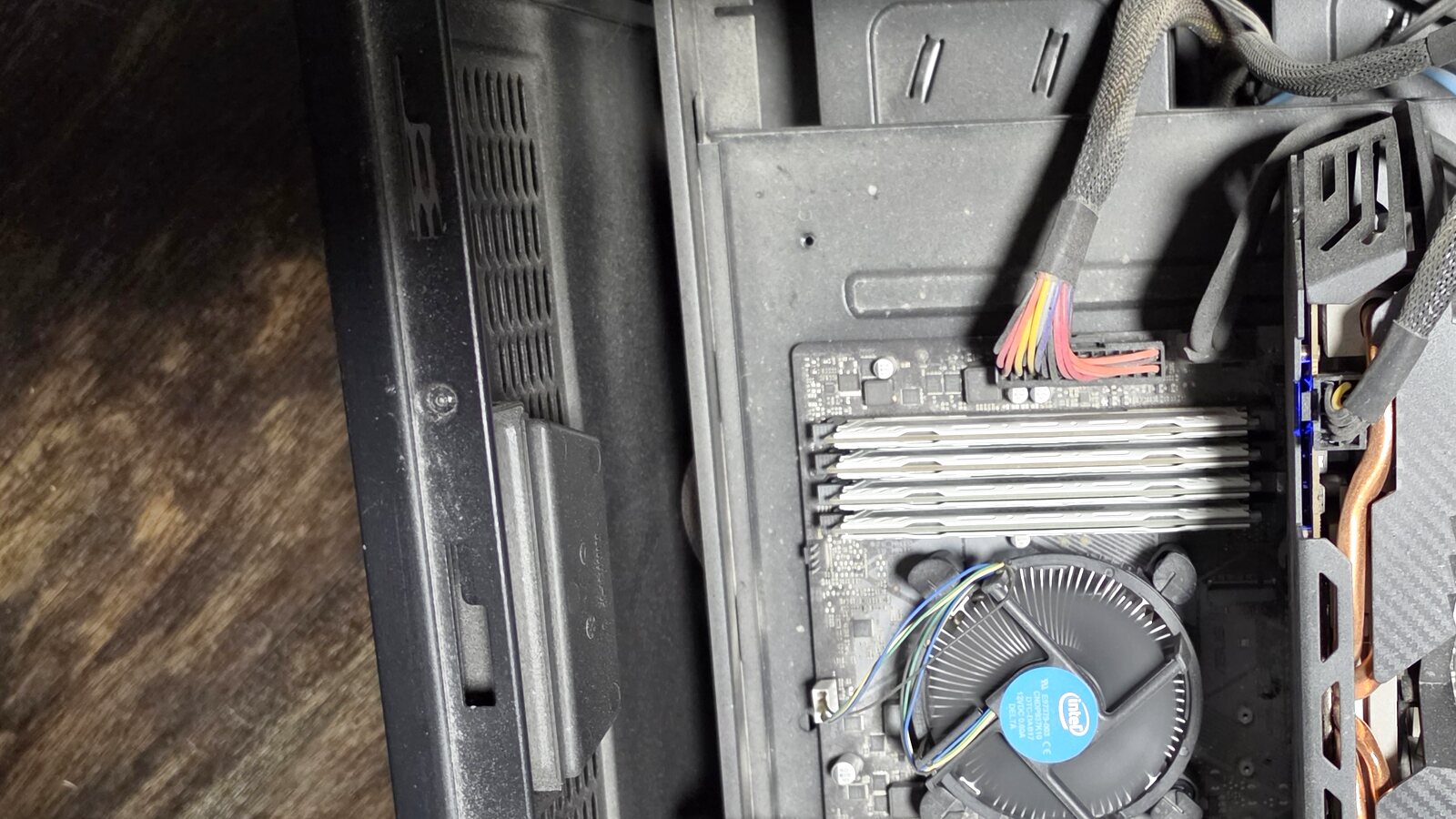
In this tutorial, we'll be building a homelab setup that can handle running Stable Diffusion, a powerful language model for text-to-image generation. By building our own setup, we'll save money compared to renting cloud resources and have full control over the hardware. With an estimated cost of around $500-$700, depending on the specific parts chosen, this project is perfect for those looking to dip their toes into AI research without breaking the bank.
bash <(curl -s https://developer.amd.com/roc-sdk/download/rocm-2026.sh)
Expected output: The installation script will run and configure the ROCm environment.
pip install stable-diffusion
Expected output: The package will be downloaded and installed on your system.
stable_diffusion.py and add the following code:import torch
from stable_diffusion import StableDiffusion
model = StableDiffusion()
Expected output: The script will load the Stable Diffusion model without errors.
python stable_diffusion.py
Expected output: The script will start generating images based on your input text.
nvidia-smi (for NVIDIA GPUs) or amdgpu-pro-monitor (for AMD GPUs). For this tutorial, we'll be using the latter:amdgpu-pro-monitor -i 0 --monitor
Expected output: The tool will display real-time information about your GPU's memory usage and performance.
Cause: You forgot to install the ROCm toolkit.
Fix: Run the installation script again: bash <(curl -s https://developer.amd.com/roc-sdk/download/rocm-2026.sh)
Cause: Your system doesn't have a NVIDIA GPU. Fix: Install an AMD GPU and re-run the script.
Cause: The Stable Diffusion model is using too much VRAM. Fix: Reduce the input text size or use a smaller model variant.
Cause: Your system's power supply can't handle the demand. Fix: Upgrade your power supply to a higher wattage or reduce the number of concurrent processes.
Tokens per second: 1000-1500 VRAM usage: 6.5 GB - 7.5 GB Power draw: ~200W Temperatures: 65°C - 75°C
Keep in mind that these numbers may vary depending on your specific system configuration and the input text size.
Q: What are the minimum requirements for this setup? A: You'll need an 8GB AMD GPU, a decent CPU, and around 16 GB of RAM. The rest is just icing on the cake.
Q: Can I use this setup for other AI projects? A: Absolutely! With the ROCm toolkit and some Python magic, you can run a wide range of AI models and applications.
Q: Will this setup be able to handle more complex models? A: Not quite. While it's great at handling Stable Diffusion, this setup might struggle with more demanding models that require higher-end hardware. But hey, that's what upgrades are for!
If you're looking for a budget-friendly way to get started with AI research and can't afford cloud resources, then building your own homelab setup is the way to go. With this tutorial, you'll be up and running with Stable Diffusion in no time. Just remember to keep an eye on those temperatures and power consumption numbers!
Run AI on hardware you already own. One hands-on brief a week — local LLMs, budget GPUs, homelab builds. Free.